



Your CRM Is Lying to You. And You Are Probably Letting It.
- July 28, 2026
- Posted by: Bizwin-2024
- Category: blog
No Comments
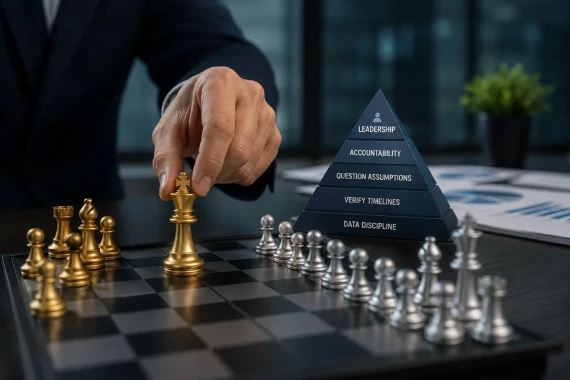
Many organizations spend months evaluating CRM platforms, comparing features, negotiating contracts, and managing complex migrations. Yet months after implementation, forecasts remain unreliable, pipelines stay inflated, and close rates continue to be unpredictable.
The problem is often not the CRM.
A CRM faithfully reports the information entered by the sales team. If that information is optimistic, inconsistent, incomplete, or inaccurate, the reports, dashboards, and forecasts generated by the system will reflect exactly the same problems—with better formatting.
The real issue is data discipline.

Four Ways Your CRM Is Lying to You
1
This Deal Is 70% Likely to Close.
In many sales teams, opportunity probability is based on intuition rather than evidence. One representative may assign 70% because the relationship feels positive, while another may use the same number simply because the opportunity appears promising.
Without clearly defined criteria tied to buyer behaviour, confirmed milestones, or decision progress, probability percentages become subjective. Every salesperson interprets them differently, making forecast accuracy nearly impossible.
2
The Deal Is in Proposal Stage.
Proposal stage often means different things to different people.
For one salesperson, it means a formal proposal has been submitted. For another, it simply means pricing was discussed during a meeting or mentioned in an email.
Unless every pipeline stage has a shared definition with clear entry requirements, the CRM cannot provide an accurate picture of the sales pipeline. Instead, leadership ends up reviewing opportunities that exist in different stages based on individual interpretation rather than consistent standards.
3
Close Date: End of This Quarter.
Close dates frequently represent internal sales targets rather than buyer commitment.
Many opportunities receive quarter-end close dates because the sales team wants them to close during that reporting period—not because the customer has agreed to a purchasing timeline.
A reliable CRM forecast depends on buyer-confirmed timelines, not desired outcomes. When close dates are based on assumptions instead of customer commitment, forecasting loses credibility.
4
Last Activity: Three Days Ago.
Recent activity does not automatically indicate deal progress.
A CRM records that an interaction occurred, but it cannot determine whether the activity moved the opportunity forward. A meaningful buyer conversation and an unanswered follow-up email both appear as recent activity.
High activity does not necessarily indicate a healthy opportunity, and low activity does not always indicate a lost one. Activity metrics should never replace meaningful sales conversations and buyer progress.
A CRM Reports Data. It Does Not Validate It.
A CRM does not create inaccurate information.
It simply stores whatever your team enters—without judging whether that information reflects reality.
That makes one question more important than choosing the next CRM platform:
What standard of data discipline does your sales team follow?
Teams that share consistent stage definitions, evidence-based opportunity probabilities, and buyer-confirmed close dates can produce reliable forecasts—even using a spreadsheet.
Teams without those disciplines will generate unreliable forecasts regardless of how advanced or expensive their CRM software may be.
Data Discipline Is a Leadership Decision
Reliable forecasting starts with leadership, not technology.
Sales leaders must consistently challenge assumptions, ask why a deal is in a particular stage, understand how probability was determined, verify buyer-confirmed timelines, and review whether recent activity actually advanced the opportunity.
Software cannot enforce these standards on its own.
Until leadership establishes and maintains consistent data discipline, the CRM will continue reporting exactly what it is given—which may not be the truth.

Frequently Asked Questions
What does “Your CRM is lying to you” mean?
It means the CRM is reporting inaccurate or inconsistent information because the data entered by the sales team lacks consistent standards. The software itself is not creating inaccurate forecasts.
Why are CRM sales forecasts often inaccurate?
Forecasts become unreliable when opportunity stages, probability percentages, close dates, and activity updates are based on assumptions instead of measurable buyer evidence.
Can upgrading a CRM improve forecast accuracy?
Not by itself. A new CRM cannot fix inconsistent sales processes or poor data quality. Forecast accuracy improves through disciplined data entry and standardized sales practices.
Why are shared pipeline stage definitions important?
Shared definitions ensure every salesperson qualifies opportunities using the same criteria, making pipeline reports and forecasts more reliable.
What is CRM data discipline?
CRM data discipline refers to consistently entering accurate, evidence-based sales information using agreed standards for stages, probabilities, close dates, and buyer interactions.
Conclusion
Before investing in another CRM platform, evaluate the quality of the information already being entered into your existing system.
Forecast accuracy is not determined by software features. It is determined by consistent sales processes, shared definitions, evidence-based qualification, and disciplined leadership.
A CRM reflects reality only when the data behind it reflects reality.
