Transformational selling techniques
for top global companies
for top global companies

| Areas of Difference | Traditional Selling | Solution Selling | Value Selling |
|---|---|---|---|
| Focus | Closing the Deal | Solving the customer’s problem | Enabling the customer’s business journey |
| Foundation of Sales pitch |
Features, Functionatilies, Attributes, Price |
Gain creation, Pain/Risk mitigation, Price |
Desired Future State and Value of Success of the customer |
| Approach | Transactional | Strategic | Transformative |
| Mostly suitable for selling |
Almost all types of offerings | Specialized or Niche offerings | Differentiated offerings |
| Target customers | Wide range offering is relevant | Specific Verticals or Horizontals | Specific accounts |
| Decision makers (in most cases) |
Technical and/or Functional management | Technical and/or Functional management | Executive Management |
| Pricing practice | Cost or Effort based | Outcome or Effort based | Value based |
| Sales cycle | Short, Medium or Long, based on value and complexity of the deal |
Medium to Long | Medium to Long |
| Sales conversion % | Average | Medium to High | Highest |
| Customer Lifetime Value |
Low to Medium | Medium to High | Highest |
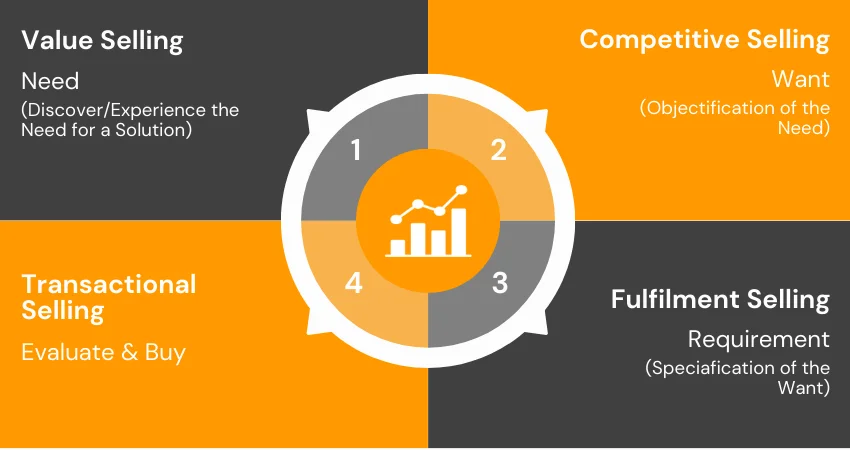



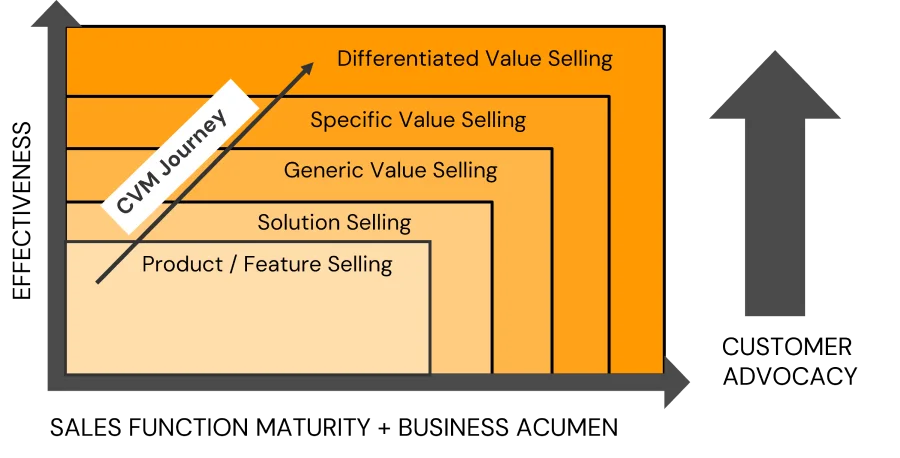
Value Selling is a sales method that focuses on the value you deliver — not just on price or features. It emphasizes the outcomes customers gain and aligns with their Desired Future State (DFS).
The goal is to ensure sustainable Customer Lifetime Value (CLV) and expand Customer Equity.
Because doing business requires more than just selling a product. It brings a transformational shift in how your sales and account teams engage, creating deeper differentiation, higher margins, and long-term relationships.
At every stage: prospecting, acquisition, and account management.
Some of the benefits:
Front-line sales teams, pre-sales, account management teams — especially in businesses with complex, high-margin deals.
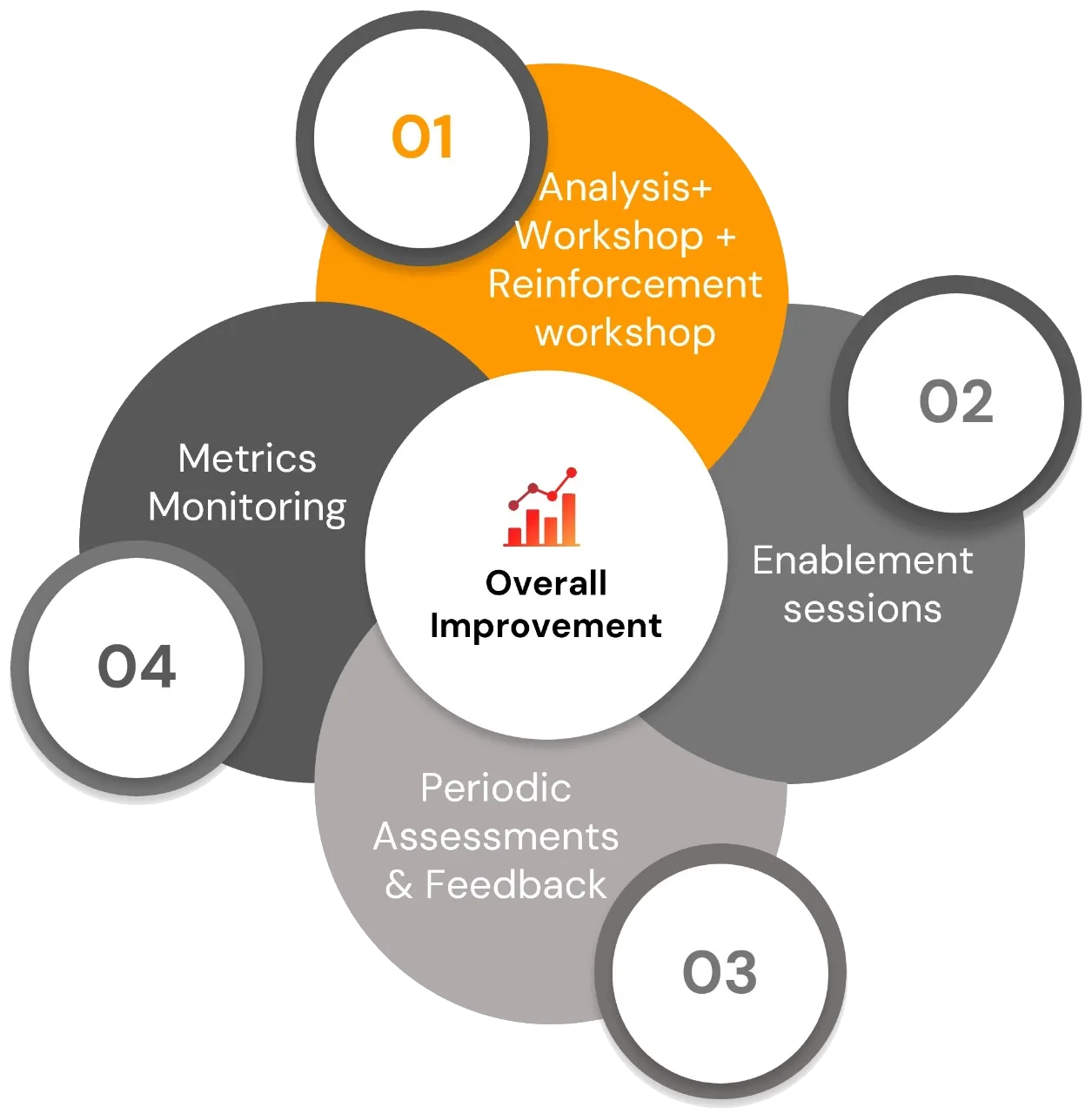
Typically 4 to 10 months, depending on the number of people involved, complexity, and existing capabilities.

Vipul Kukreja has over 36 years of experience in Sales and Marketing, Entrepreneurship, successfully Launching new ventures, managing Profit & Loss Account, motivating teams to achieve business goals and deliver customer value. After his M.B.A. in Marketing from the University Business School, Panjab University. Vipul started his career with Garware Paints Limited. As a management trainee and Sales Officer, he focused on achieving the company goal of making an entry in the B2B market in the state of Rajasthan, where the primary focus of the company was consumer segment.
His passion for Information Technology sector started when he joined Computer Point, India’s first one-stop outlet for everything in computers. He closely worked with his senior management in establishing the company in its formative stages to spearhead the adoption of computer systems in the corporate through Learning and Development. His former superiors and colleagues still reminisce fondly about his evangelizing usage of computers in over 1000 major corporates in the early years of computerization in India. He converted this market need for knowledge of technology into a highly profitable Computer Learning Division and ran it as a profit center.
At Silverline Technologies Limited, he replicated the computer training model, taking it to much larger scale, helping a fledgling IT company establish a pre-eminent name in the marketing of computer training and related solutions and software products. During this period, he designed, developed and delivered Sales Training Program for his team.
HA short stint in the U.A.E. with Jumbo Electronics computer division as Sales Manager gave him exposure to an international and multi-cultural market. Back in India, he took up one of the biggest challenges of his life as General Manager -Sales & Marketing for MicroGiga (a Mafatlal company) where with the help of his seniors and the board, he helped turn the company profitable in a short span of time, enabling it to become one of the largest business partners of Hewlett Packard from India, globally.
His last assignment in the corporate sector was Tata Consultancy Services where he played the role of the National Head for Software Products.
Over 2 decades ago, bitten by an entrepreneurial bug, he founded and launched an executive search firm, M2S Consulting. Within a short span, the company grew to become one of the biggest go-to brand names for Headhunting top management for the Information Technology sector in Mumbai. Vipul is a certified DISC Assessor, a Certified Business Coach, and a Certified Executive Coach.
A lifelong student of management, sales, marketing, business development, Vipul is a trained Digital Marketor too. As an entrepreneur, he empathizes with the businesses struggling to grow and is very passionate about helping business seek the business goals and dreams, they had set out for. As a mentor, advisor and execution partner his philosophy is co-creation of business outcomes.
Vipul is a charter member of The Rotary Club of Thane Skyline, where he served as a President too. He is an active member of the Rotary District 3142, contributing actively to the upliftment of the underprivileged. He is an avid reader and spiritually inclined. Integrity to self and the customer is his dictum and delivering value is the battle cry.
Married to Jyoti, Vipul happily lives with his mother and daughter Janhavi and son Vishrut.