


Why Embedded Practitioners Beat Traditional Consulting
— Every Single Time
Discover how working inside the system delivers sustainable behaviour change and lasting results


I have a confession to make. Early in my career, I delivered consulting engagements the traditional way. I would spend weeks researching, building frameworks, and preparing detailed recommendations.
The final presentation would be delivered to the leadership team. Everyone would agree with the findings. Action items would be noted. And then, more often than not, very little would actually change.
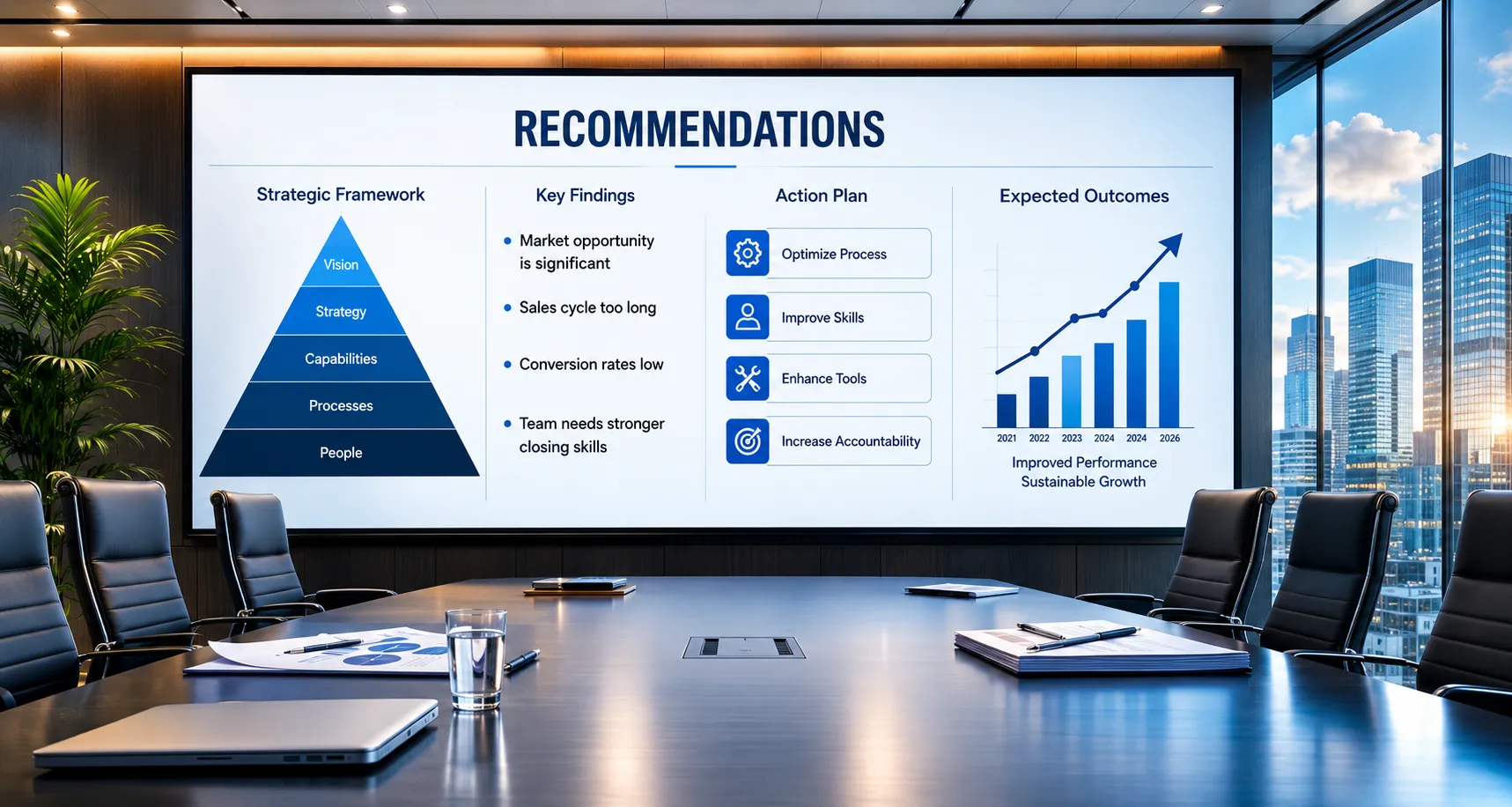
The issue was not the quality of the thinking. The issue was the distance between the thinking and the doing. Advice delivered from outside a system rarely survives contact with the reality inside it.

Four fundamental advantages that set embedded work apart from traditional consulting
Consultants solve the problem they were briefed on. Embedded practitioners uncover and solve the real one through daily immersion.
Recommendations age badly. Embedded work evolves with market conditions and deal dynamics, staying relevant to current challenges.
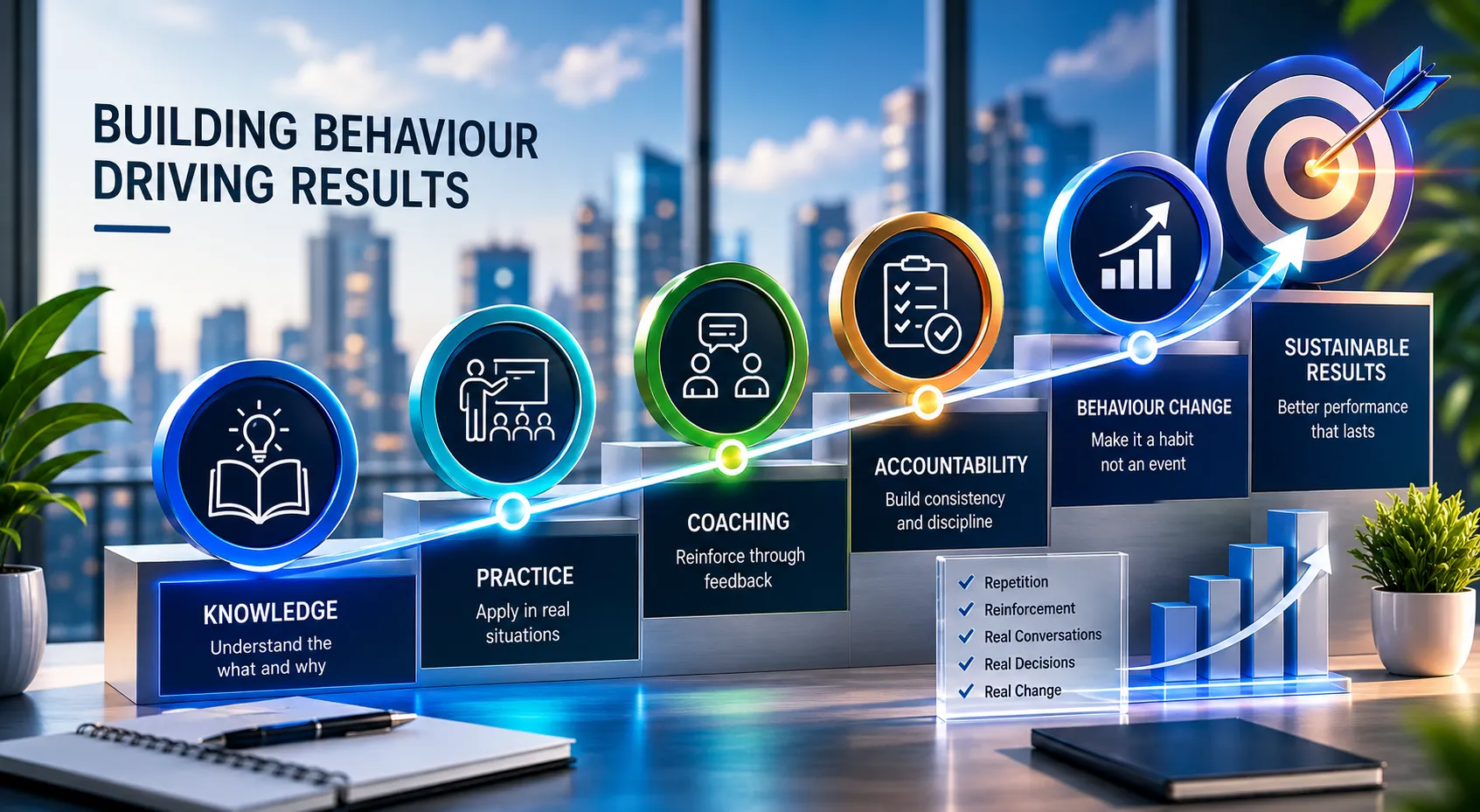
Training transfers knowledge. Embedding transfers behaviour through repetition, accountability, and coaching within real situations.
Consultants leave. Embedded work leaves a system behind that teams continue to operate successfully without external support.
If you recognise two or more of these signs, it might be time to ask a direct question
You have done the workshops. Brought in the consultants. Put the team through a sales programme. For a week or two, there is energy. Then, slowly, everyone goes back to doing what they always did.

You sit down every week to review the pipeline. Numbers are shared. Optimism is expressed. Dates are committed to. Then the quarter ends and half of what was "almost done" never closed.
There is always that one person. The one the team relies on. When asked what makes them effective, even they often struggle to explain it.

Renewals are coming in. Referrals land occasionally. But when the conversation turns to new logo acquisition, things become vague.

When you have built a team, managed them through difficult quarters, and genuinely care about the people, it becomes difficult to see the system objectively.
Working on actual deals and real scenarios
Conducting honest pipeline and performance discussions
Participating in the difficult strategic talks
Get answers to common questions about embedded practitioner support
An embedded practitioner works within a company’s operating environment, participating directly in sales reviews, pipeline management, and deal execution to drive practical and sustainable improvements.
Traditional consultants typically provide recommendations and frameworks from an external perspective. Embedded practitioners work inside the system, helping teams implement changes and build new behaviours through ongoing involvement.
They identify root causes more effectively, adapt to changing conditions in real time, reinforce behavioural change through coaching, and help teams build systems they can sustain independently.
Yes. Traditional consulting remains highly valuable for strategic initiatives such as market entry, organizational strategy, and mergers and acquisitions. However, day-to-day sales behaviour change often benefits more from an embedded approach.
The primary advantage is creating lasting behavioural and process change by working directly with teams on real opportunities and real business challenges.
Is what we are doing right now actually going to get us where we need to be?
More effort applied to a broken system produces more of the same results. The answer is usually not harder work—it is better architecture, applied from the inside.
Discover how our embedded practitioner model can help your team achieve sustainable revenue growth

Vipul Kukreja has over 36 years of experience in Sales and Marketing, Entrepreneurship, successfully Launching new ventures, managing Profit & Loss Account, motivating teams to achieve business goals and deliver customer value. After his M.B.A. in Marketing from the University Business School, Panjab University. Vipul started his career with Garware Paints Limited. As a management trainee and Sales Officer, he focused on achieving the company goal of making an entry in the B2B market in the state of Rajasthan, where the primary focus of the company was consumer segment.
His passion for Information Technology sector started when he joined Computer Point, India’s first one-stop outlet for everything in computers. He closely worked with his senior management in establishing the company in its formative stages to spearhead the adoption of computer systems in the corporate through Learning and Development. His former superiors and colleagues still reminisce fondly about his evangelizing usage of computers in over 1000 major corporates in the early years of computerization in India. He converted this market need for knowledge of technology into a highly profitable Computer Learning Division and ran it as a profit center.
At Silverline Technologies Limited, he replicated the computer training model, taking it to much larger scale, helping a fledgling IT company establish a pre-eminent name in the marketing of computer training and related solutions and software products. During this period, he designed, developed and delivered Sales Training Program for his team.
HA short stint in the U.A.E. with Jumbo Electronics computer division as Sales Manager gave him exposure to an international and multi-cultural market. Back in India, he took up one of the biggest challenges of his life as General Manager -Sales & Marketing for MicroGiga (a Mafatlal company) where with the help of his seniors and the board, he helped turn the company profitable in a short span of time, enabling it to become one of the largest business partners of Hewlett Packard from India, globally.
His last assignment in the corporate sector was Tata Consultancy Services where he played the role of the National Head for Software Products.
Over 2 decades ago, bitten by an entrepreneurial bug, he founded and launched an executive search firm, M2S Consulting. Within a short span, the company grew to become one of the biggest go-to brand names for Headhunting top management for the Information Technology sector in Mumbai. Vipul is a certified DISC Assessor, a Certified Business Coach, and a Certified Executive Coach.
A lifelong student of management, sales, marketing, business development, Vipul is a trained Digital Marketor too. As an entrepreneur, he empathizes with the businesses struggling to grow and is very passionate about helping business seek the business goals and dreams, they had set out for. As a mentor, advisor and execution partner his philosophy is co-creation of business outcomes.
Vipul is a charter member of The Rotary Club of Thane Skyline, where he served as a President too. He is an active member of the Rotary District 3142, contributing actively to the upliftment of the underprivileged. He is an avid reader and spiritually inclined. Integrity to self and the customer is his dictum and delivering value is the battle cry.
Married to Jyoti, Vipul happily lives with his mother and daughter Janhavi and son Vishrut.