



The Hidden Cost of a Long Sales Cycle
- July 2, 2026
- Posted by: Bizwin-2024
- Category: blog
No Comments

A slow deal rarely feels expensive. It simply becomes part of the way business operates. However, when the average sales cycle stretches from 60 days to 120 days, the impact reaches far beyond delayed revenue.
Every additional week affects cash flow, forecast reliability, sales team motivation, and competitive positioning. A longer sales cycle is not just a timing issue. It introduces hidden costs that often go unnoticed until they begin affecting business performance.
The financial impact of extended sales cycles compounds over time. What starts as a seemingly minor delay becomes a systemic challenge affecting multiple business functions simultaneously, from operational cash management to strategic planning.


The Four Key Impacts
1
Cash Flow
Revenue Delayed Means Capital Tied Up
Every open opportunity represents future revenue. Until that deal closes, businesses continue funding payroll, vendor payments, operational expenses, and ongoing overheads without realizing the expected income. Doubling the average sales cycle effectively doubles the amount of working capital tied up in the sales pipeline.
2
Forecast Accuracy
Longer Cycles Increase Uncertainty
The longer a deal stays open, the more opportunities there are for external factors to change the outcome. Budgets evolve. Decision-makers change roles. Business priorities shift. Procurement timelines move. Each additional month introduces new variables that reduce forecasting accuracy.
3
Team Morale
Delayed Decisions Drain More Energy Than Rejection
Sales professionals recover quickly from a clear "no." What is far more difficult is managing opportunities that remain in an extended state of uncertainty for months. Long-running deals require repeated follow-ups, ongoing effort, and continuous optimism without meaningful progress.
4
Competitive Exposure
Time Creates Opportunity for Competitors
Every additional week an opportunity remains open is another week competitors can engage the same buyer. A prolonged buying process gives alternative vendors more chances to introduce different solutions, stronger relationships, or simpler purchasing experiences.
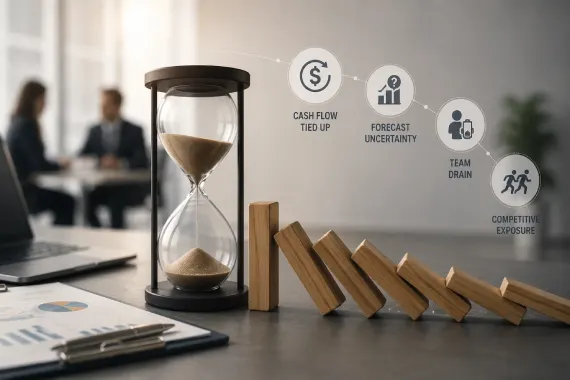
A Long Sales Cycle Is More Than a Delay
A longer sales cycle affects multiple areas of business performance simultaneously. It means cash remains locked inside the pipeline instead of supporting business growth. Revenue forecasts become less dependable as uncertainty increases. Sales teams spend more time maintaining opportunities than creating new ones. Meanwhile, competitors gain additional opportunities to influence buying decisions.
If your average deal takes significantly longer to close today than it did a year ago, it is worth investigating before the longer sales cycle becomes the new normal.
Frequently Asked Questions
Why is a long sales cycle a problem?
A long sales cycle delays revenue, ties up working capital, reduces forecast accuracy, affects sales team morale, and increases the likelihood of competitors winning the opportunity.
How does a longer sales cycle affect cash flow?
Delayed deal closures mean businesses continue funding operating expenses while expected revenue remains unrealized, increasing the amount of capital tied up in the sales pipeline.
Why do long sales cycles reduce forecast accuracy?
The longer an opportunity remains open, the greater the chance that budgets, decision-makers, business priorities, or procurement timelines will change, making sales forecasts less reliable.
How does a long sales cycle impact sales teams?
Extended opportunities require continuous follow-up and effort over long periods. This prolonged uncertainty can reduce motivation more than receiving a clear rejection.
Why does a longer sales cycle increase competitive risk?
Every additional week gives competitors more time to engage the buyer, present alternative solutions, and influence the purchasing decision.
Understanding the True Cost of Your Sales Process
By addressing the underlying factors that extend your sales cycle, you can improve cash flow management, increase forecast reliability, boost team motivation, and strengthen your competitive position in the market.
